Cloning
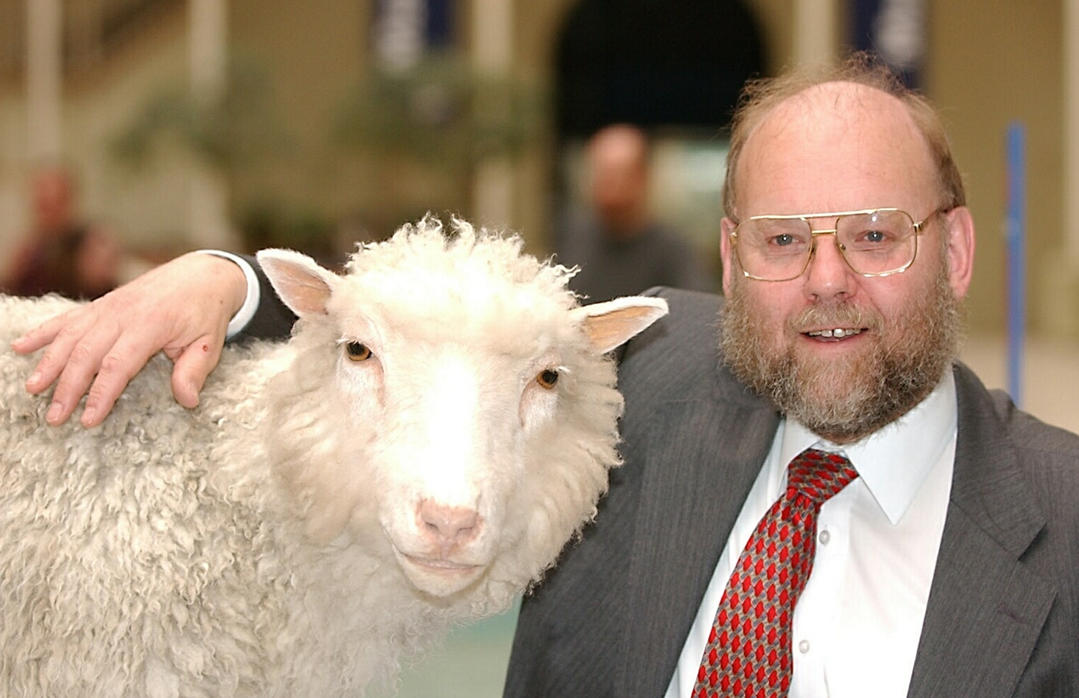
Ian Wilmut with the sheep, Dolly, after 277 attempts.
Who Started This Mess?
No single person can be credited with creating the process of cloning since cloning has been a work in progress for over 100 years. But we can acknowledge people such as Ian Wilmut and Keith Campbell that made major breakthroughs such as cloning via somatic cell nuclear transfer.
This discovery was made in 1996, when Dolly was born, though the project had begun much earlier. Wilmut and Campbell had assistance from their colleagues at Roslin Institute in Scotland, where Dolly was born.
What Exactly Is It?
Cloning via somatic cell nuclear transfer had never been done before at that point. As an adult, cells will shut down genes that are no longer useful. When these cells are used as donors for cloning, they must be reset to an embryonic state. This process is highly likely to be incomplete or fail.
Cloning is still an ongoing project, as we look into cloning of more advanced life forms such as humans. Though cloning is a sensitive subject that holds much controversy.
Why Would We Clone?
Cloning is an extremely important process for many different groups. Farmers may use cloning to produce livestock that produces high-quality products. Pet owners may even use cloning as a way to bring back their deceased pets.
Scientists have been looking into using cloning as a way to revive extinct creatures dating as far back as dinosaurs. All of this research could lead towards cloning of humans, which could be used to repair the human body from illness.

Puppies that have been cloned and a therefore nearly identical.
Words to Know!
Cloning: A process that is used to create genetically identical copies of organisms such as cattle or dogs.
Somatic cell nuclear transfer: The process of removing a nucleus fro ma healthy egg and having it act as host within another cell.
Somatic cells: Cells within living organisms that are NOT reproductive cells.
Genes: Units of heredity that determine some characteristics of offspring.
Embryonic: Defines an object, usually cells, that are in a stage where they have potential to develop further.